




What should AI do during a live sales call?
Less than most demos imply—and more precisely at the moments that can change the outcome.
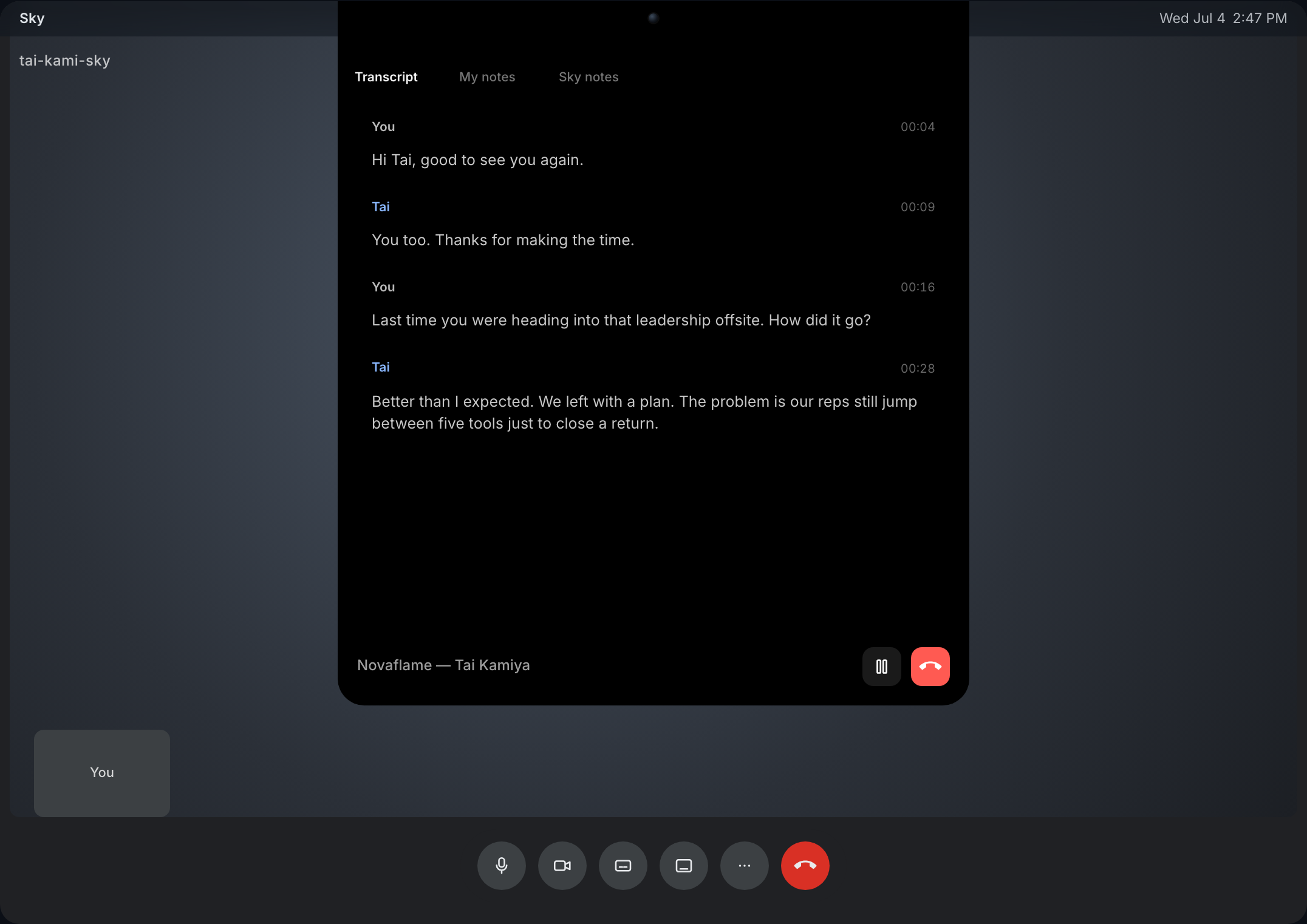
During the call, the seller’s attention belongs to the customer. AI should listen quietly, preserve the conversation, and surface only the cue that is useful now.
After the call, it can do more: organize notes, update memory, draft the follow-up, and prepare the next step. The person still decides what leaves the room.

“AI should protect attention, not compete for it.”
Useful in the moment. Expansive after it.
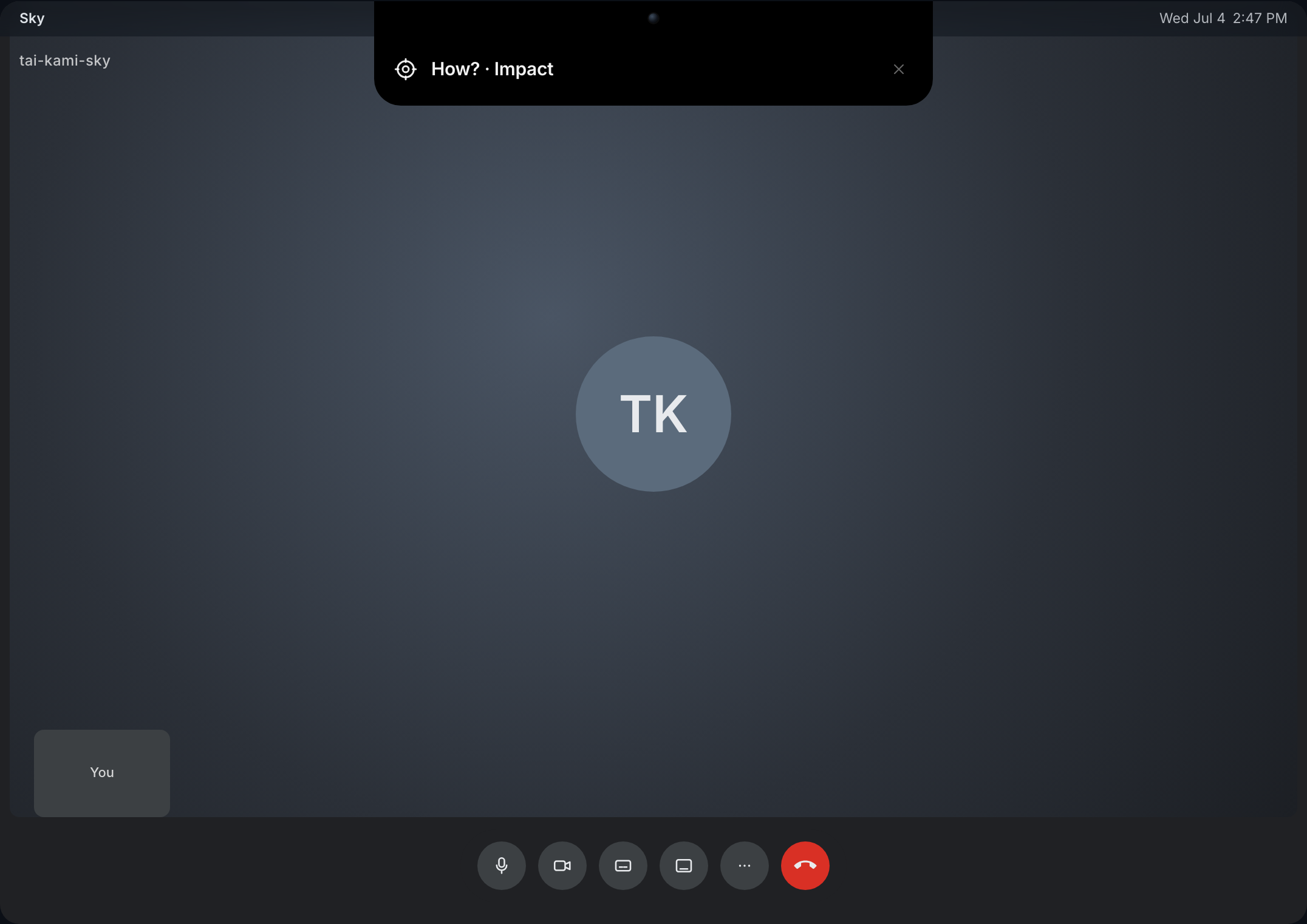
During a call, the seller’s attention belongs to the customer. Live AI should stay quiet until it can point to one consequential opening: an untested impact, an unresolved objection, a missing decision path, or a commitment that needs an owner.
The cue must be brief, grounded in what was actually said, and easy to dismiss. It should never script the rep, stack prompts, or compete with the person across the table.
The person remains responsible.
Sky can remember more and move faster, but it should not decide what leaves the room. The seller reviews the message, confirms the record, and owns the promise. Human judgment is not the bottleneck; it is the point.
The best live-call AI protects attention now and compounds context later.